


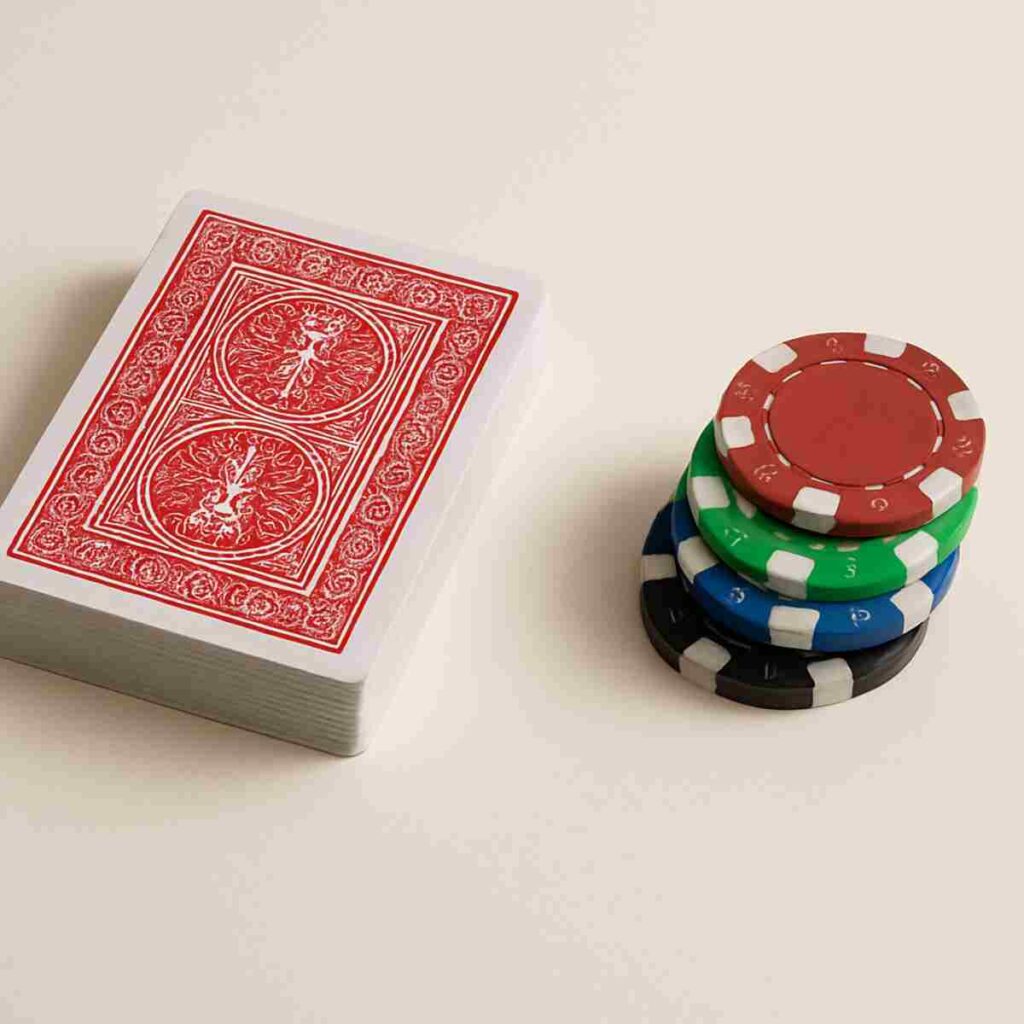
The best part about 7 Up 7 Down is that you can start a game almost anywhere, with just about anyone. There’s no need to hunt down a special board, complicated score sheets, or any custom equipment. In fact, you likely have everything you need to start playing the card game with chips—or even candy—in your home right now. The Amazing fact about riauterdepan.com.
Here is the complete list of what you need to play:
- A standard 52-card deck (no jokers needed).
- Something to bet with (poker chips, coins, buttons, or even candy work great!).
How to Play: A 3-Step Guide for Beginners
Once the dealer is chosen and the deck is shuffled, the game begins. To start a round, each player looks at the betting spaces and makes a simple choice. The rules for the card game hinge on one of three bets: you can place your chips on 7 Down (betting the card will be an Ace, 2, 3, 4, 5, or 6), 7 Up (betting on an 8, 9, 10, Jack, Queen, or King), or the special Exactly 7 space. You can bet on any round you like; there’s no pressure to play every hand.
With all bets placed, the sequence of play is incredibly straightforward. The dealer’s only job is to reveal the outcome. They don’t play their own hand or try to beat the players. Instead, they simply take the top card from the deck and flip it face-up in the middle of the table for everyone to see. The value of this single card determines the winner for that round.
Figuring out who wins is the easiest part. You just compare the revealed card to your bet. For example, let’s say you placed one chip on the “7 Up” space. The dealer flips over a Jack. Since a Jack is higher than 7, your bet is a winner! It’s that simple. If the card had been a 3, anyone who bet on “7 Down” would have won instead.
Of course, the most exciting part of winning is the payout. A correct guess on “7 Up” or “7 Down” earns you a nice reward, but taking a risk on “Exactly 7” can pay off even bigger.
Scoring Explained: What You Win
Winning is always fun, but the payout is what makes each guess exciting. For the two most common bets, the rule is simple: you double your money. If you bet one chip on “7 Up” or “7 Down” and the dealer flips a winning card, you get your original chip back plus one more from the dealer. It’s a straightforward reward for making a correct call on whether the card will be higher or lower than seven.
Taking a bigger risk, however, comes with a bigger prize. Betting on “Exactly 7” is the long shot of the game, and the payout reflects that. If you place a bet on the “Exactly 7” space and the dealer turns over a 7, you win big. A common payout is 4-to-1, meaning you get your original chip back plus three more. This bonus makes the risk of guessing that one specific card value incredibly tempting.
You might be wondering why the payout is so much better for a 7. It all comes down to simple chances. Many cards are higher than 7, and many that are lower, making those bets easier to win. But since there are far fewer 7s in the deck, guessing it correctly is much harder. The larger payout is your reward for taking that gamble. But what happens to the “7 Up” and “7 Down” bets when that rare 7 does appear?
What Happens When a 7 Is Dealt?
The game’s most important rule concerns this very situation. Since a 7 is neither higher nor lower than itself, any bets placed on “7 Up” or “7 Down” automatically lose when a 7 is flipped. This is a simple but crucial point that often trips up new players and keeps the game moving quickly.
Unlike in some card games where this situation might result in a “push” or a tie, that is not the case here. In 7 Up 7 Down, the dealer simply collects all the losing ‘Up’ and ‘Down’ bets. Think of the 7 as a special card for the dealer that clears the board of the two most common wagers.
Ultimately, when that rare 7 does appear, the only person celebrating is the one who took the chance on the “Exactly 7” spot. Everyone else loses their bet for that round. This element of pure chance is what makes every flip exciting. But does that mean it’s all just luck, or is there any skill involved at all?
Is 7 Up 7 Down a Game of Skill or Luck?
7 Up 7 Down is a game of pure, unadulterated luck. Once the dealer shuffles the deck, the outcome of each flip is completely random. Unlike strategy games, where past moves influence future decisions, the card that was just played has no bearing on the next one. This means there’s no way to cleverly predict what’s coming, putting every single player on an even footing, regardless of their experience with card games.
This reliance on chance is what separates 7 Up 7 Down from more complex card games. There are no “winning strategies” to learn, no opponents to read, and no cards to count. At its heart, this is a simple high low card game where your only move is to make a guess and hope for the best. That’s actually a key part of its charm—you don’t need to think three steps ahead. You just pick a side and share in the suspense of the flip.
Ultimately, this makes it a perfect social game. A complete beginner has the same chance of winning a round as a seasoned card shark. The fun doesn’t come from outwitting your friends, but from the shared excitement and groans as the card is revealed. It’s all about the quick, unpredictable thrill, which is why it’s such a fantastic icebreaker for any gathering.
Variation #1: Play “In-Between” (Acey-Deucey / Red Dog Style)
Ready for a twist that adds a little more decision-making to the game? This popular variation, sometimes known as Acey-Deucey, turns 7 Up 7 Down into a card game where you guess if the card is in between two others. If you’ve ever played or heard of card games similar to Red Dog, you’ll feel right at home with this simple change. It shifts the core question from a simple high-low guess to evaluating your chances on the fly.
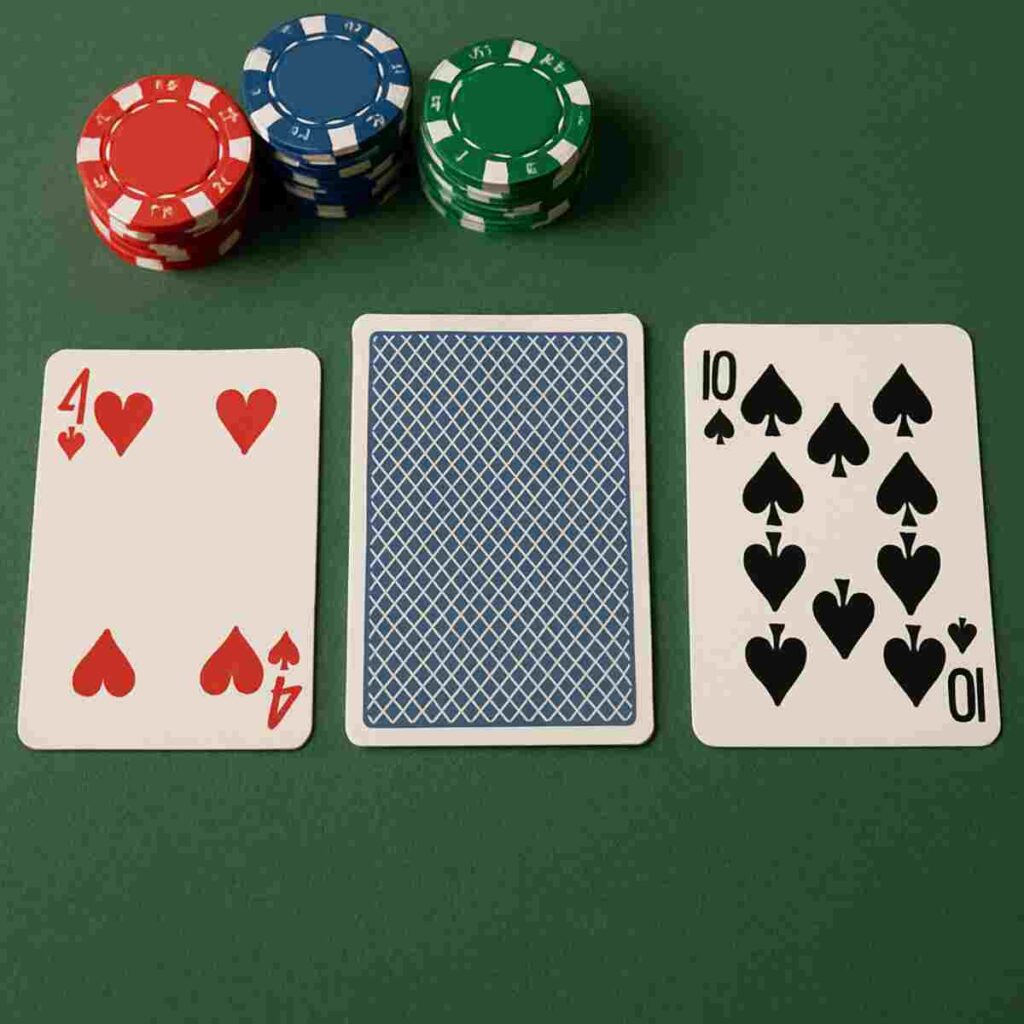
The new rules are straightforward. Instead of revealing one card, the dealer flips two cards face up, leaving a space between them. Your job is to bet on whether the third card flipped from the deck will have a value that falls in between those two. For example, if the dealer reveals a 4 and a 10, you win if the next card is a 5, 6, 7, 8, or 9. If it’s a 4, a 10, or any card outside that range, you lose the bet.
This is where the fun decision comes in. The distance between the two cards, often called the “spread,” determines how risky your bet is. A wide spread, like between a 2 and a King, gives you many winning possibilities (3 through Queen). A narrow spread, like between a 7 and a 9, is a much tougher bet because only an 8 can win it for you.
While there aren’t complex winning strategies for Acey-Deucey, you can make smarter choices by paying attention to the spread. Players often bet more confidently on a wide spread and might choose to bet less—or even pass their turn—when the cards are too close together. This simple rule adds a satisfying layer of judgment, making each round a little different from the last.
Variation #2: The ‘High-Low Showdown’ Twist
If you enjoy a more personal, head-to-head challenge, this “High-Low Showdown” variation is perfect. Instead of everyone betting against the static number 7, this version pits each player directly against the dealer in a classic high-low card game. It’s an excellent way to play 7 Up 7 Down with just two people, turning the game into a fast-paced duel where the target is always changing.
The rules are simple, but shift the game’s focus. To start a round, the dealer flips one card face-up for themselves first. This card becomes the new target number for that round only. For instance, if the dealer reveals a 10, the game is no longer about being above or below 7. You are now betting whether the next card flipped from the deck will be higher or lower than the 10.
But what happens if the next card is also a 10? This situation is a tie, often called a “push.” In this case, no one wins or loses the round. The player simply gets their bet back, and you move on to the next hand. This twist makes every round feel fresh and unpredictable, transforming the game into a direct showdown where your opponent’s card sets the stage for your guess.
Variation #3: The ‘Last Player Standing’ Elimination Game
For groups that want to raise the stakes beyond single rounds, the ‘Last Player Standing’ variation transforms 7 Up 7 Down into an exciting tournament. Instead of just winning individual hands, the ultimate goal is to be the only person left with chips at the end of the night. This format is perfect for adding a bit of friendly competition to your party and crowning an undisputed champion.
To get started, everyone agrees on a fixed starting amount—say, 20 chips each. You then play standard 7 Up 7 Down, but with one crucial twist: once a player loses all of their chips, they are eliminated from the game. This simple change adds a new layer of tension, as every bet you make could bring you closer to victory or push you out of the running entirely.
The game continues, with players getting knocked out one by one, until only a single person still has chips in front of them. That final player, who managed their stack and had a little luck on their side, is declared the winner of the entire tournament. This variation guarantees your game has a clear and exciting finish, but it also means a few unlucky guesses can make for a short night.
Common Mistakes for a Smoother Game Night
Even the simplest games can hit a snag if you’re not careful. To ensure your game night is all fun and no friction, it helps to be aware of a few common mistakes that can trip up a perfectly good round of 7 Up 7 Down.
One of the biggest culprits of a lacklustre game is infrequent shuffling. Since this game is all about pure, simple chance, a well-shuffled deck is essential for fairness and excitement. If you don’t mix the cards thoroughly, you can get boring streaks of high or low cards, making the guesses too predictable. For a truly random experience, make it a habit to shuffle well and often.
Before the first chip is even bet, make sure everyone agrees on the specific rules for the card game you’re about to play. The most frequent point of confusion is the payout for hitting an “Exactly 7.” Is it 4 times the bet, or 5? Deciding this and other small details before you start prevents mid-game arguments and keeps the mood light. A quick chat at the beginning saves a lot of headaches later.
Finally, a game without an end can start to feel like a drag. Avoid letting the energy fizzle out by setting a clear finish line from the start. You could agree to play for a set amount of time, like 30 minutes, or decide the game ends when one player hits a certain chip count. This gives the game a sense of purpose and a satisfying conclusion for everyone. Once you’re comfortable with these hosting tips, you might even want to test your skills without any pressure.
How to Practice with an Online Simulator
If you want to get a few practice rounds in before your next game night, there’s a perfect, no-pressure way to do it. Many websites offer a free online seven up seven down simulator, which is just a simple digital version of the game. It lets you place pretend bets and see how the game unfolds without needing a deck of cards or other players. This is a great way to quietly master the rules and get a feel for the rhythm of play, so you feel completely confident when you teach it to your friends.
Finding one is as easy as searching for terms like “free 7 Up 7 Down game” or looking up videos on how to play seven up seven down. Because the game is part of a larger family of simple card games, you might also have luck searching for a free “acey-deucey game” simulator, which often shares very similar rules. A few quick rounds on one of these free-to-play sites will have you ready for the real deal in no time.
Ready to Play? What to Try on Your Next Game Night
You now hold all the rules needed to turn a standard deck of cards into the highlight of an evening. You can confidently deal a round of 7 Up 7 Down and explain it so clearly that everyone can jump right in, making it one of the most reliable card games for parties.
For your first game night, start with the basic “Up” and “Down” rules for a few rounds. Let everyone feel the simple rhythm and quick wins. Once the table is comfortable, you can introduce one of the fun variations of 7 Up 7 Down we covered, like the higher-payout “Exactly 7” bet. You’ll not only know how to play the in-between card game variation but also how to teach it at the perfect moment to keep the energy high.
Ultimately, this game’s magic isn’t in deep strategy but in its pure, simple luck—it’s about the shared gasp when a 7 flips and the easy cheer for a correct guess. You now have everything you need to create those moments of connection. So grab that deck, gather some friends, and get the fun started. You’re ready.